行尸走肉第三季
怎样活得像一个数学家_我的网站

一 |
China is set to launch its first joint archaeological project in South America, following an agreement between Chinese and Peruvian institutions to study the ancient Caral civilization. The move marks a new milestone in the country's growing overseas archaeological cooperation.
The Institute of Archaeology of the Chinese Academy of Social Sciences, Peru's Caral Archaeological Zone under the Ministry of Culture, and the Professional School of Archaeology at the National University of San Marcos signed a cooperation agreement on Saturday to conduct research on the ancient Caral civilization.
The Caral civilization, which is considered to be the oldest civilization discovered in the Americas, emerged along Peru's northern coast and dates to around 3000 BC to about 1800 BC.
The project marks China's first joint archaeological initiative in South America, expanding its overseas archaeological footprint to four continents: Asia, Africa, Europe and South America. It also encompasses cooperation with Belt and Road partner countries, major centers of ancient civilizations and regions crucial to the study of human origins.
For Chinese archaeologists, the project represents a new step in overseas archaeological engagement and international cooperation, fostering mutual learning and dialogue among civilizations, Chinese experts said.
Cooperation beyond borders
In recent years, Chinese institutions have participated in a series of overseas archaeological projects, from exploring ancient cities along the Silk Road to studying early civilizations in Africa and Central Asia.
They not only brought Chinese expertise and talent, but also advanced Chinese technologies, equipment and solutions, experts said.
In February, a significant archaeological breakthrough has emerged from Mit Rahina in Giza, the site of ancient Memphis in Egypt, where a joint Chinese-Egyptian mission has uncovered a limestone structure believed to be connected to the temple of King Pharaoh Apries from Egypt's 26th Dynasty (664-525 BC), according to the Xinhua News Agency.
Zhang Hai, head of the Chinese team and an archaeologist from Peking University, told the Global Times in a previous interview that the Chinese contingent applied distinctive methods for documenting and recording finds, while deploying Chinese-developed technologies such as the "4D kankan Meta" 3D scanner for precise, real-time topographic and sectional modeling, plus specialized software for capturing dislocated stone elements in 3D to aid future digital restoration and preservation.
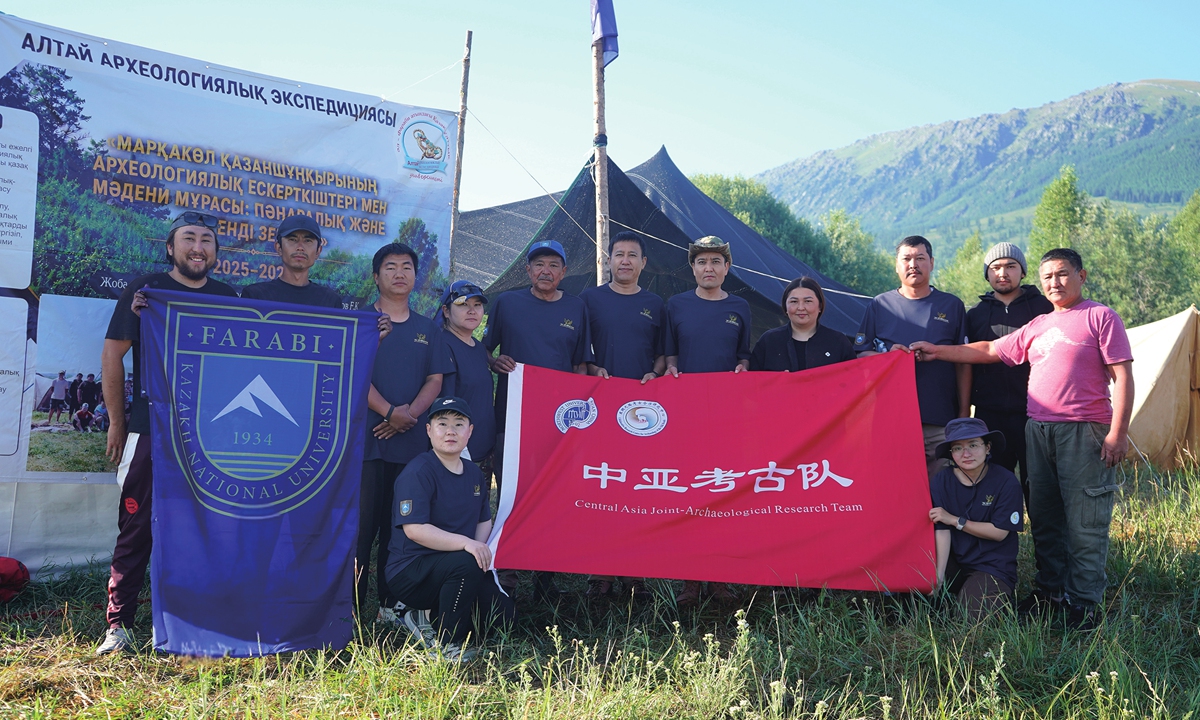
In the latest China-Kazakhstan joint archaeological project, Chinese equipment and technologies played an important role in the team's discoveries.
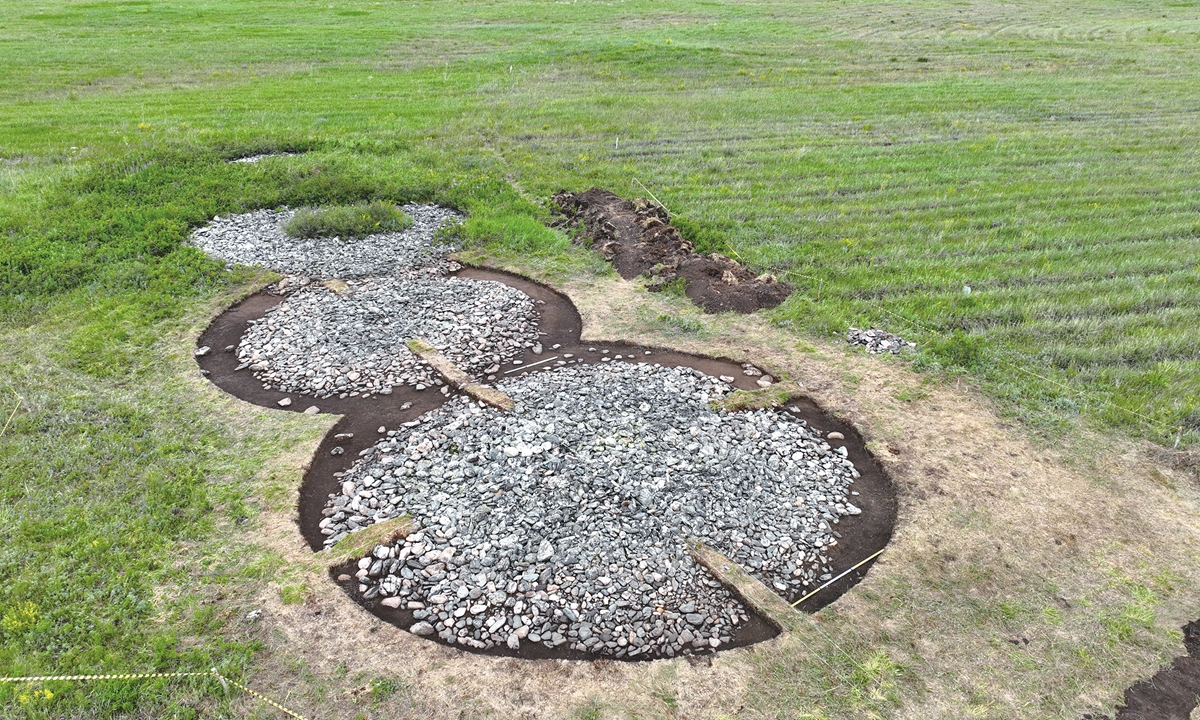
Building on the excavation, the archaeological team used drones and the "I Survey" mobile field documentation system to conduct systematic surveys around the excavation area. The survey covered more than 10 burial grounds and documented more than 50 Pazyryk-era tombs.
Pazyryk culture flourished from the late sixth century BC to the third century BC, Shao Huiqiu, a professor at the Collaborative Research Center for Archaeology of the Silk Roads, Northwest University, told the Global Times.
According to Shao, who is the Chinese lead for the China-Kazakhstan joint archaeological project, none of the tombs had previously undergone formal excavation, giving them significant research potential. The use of these technologies has enabled the team to carry out more efficient and comprehensive surveys of the area,
During the China-Kazakhstan joint archaeological project, archaeologists have recovered a number of important artifacts, including human remains, pottery, gold foil pieces, horse bones and iron horse equipment.
The finds have provide valuable material evidence for studying the burial practices, funerary customs and material culture of the Pazyryk culture in the Lake Markakol region, said Shao.
Researchers also conducted regional surveys around the excavation area, documenting more than 50 Pazyryk-era tombs.
Through the joint archaeological project, China and Kazakhstan have gained a deeper understanding of Bronze Age to Early Iron Age archaeological remains in the Lake Markakol basin, according to Shao.
In 2027, the two sides will continue excavations at key sites and burial grounds identified during the survey, while advancing regional archaeological investigations, data analysis, multidisciplinary research, young archaeologist training and academic exchanges.
Archaeological exchanges
China's overseas archaeological cooperation has also become a platform for broader exchanges among researchers and civilizations.
Such projects, experts say, are helping expand archaeological research beyond national borders and provide new perspectives on exchanges among ancient civilizations.
China's overseas archaeology has grown alongside its broader participation in global cultural heritage protection.
The National Cultural Heritage Administration's cultural heritage development plan through 2030 calls for expanded archaeological cooperation in Austronesian-speaking regions, trans-Himalayan areas, and routes connected to the Silk Road and Maritime Silk Road, reported Xinhua.
The plan seeks to strengthen the methods used to trace Chinese cultural artifacts overseas, and advance efforts to retrieve lost cultural relics.
It also pushes for greater Chinese participation in global cultural heritage governance and expanded international partnerships, including new protection cooperation agreements with more countries worldwide, according to Xinhua.
In these joint collaborations, researchers from different countries bring together their expertise in regional archaeology and fieldwork, conducting exchanges on archaeological surveys, excavations, multidisciplinary research and regional cultural studies. Such cooperation has strengthened mutual learning and laid a foundation for long-term partnerships, according to Shao.
The China-Uzbekistan cooperation has established research centers in Samarkand and Termez to support studies on human-environment interactions and cultural heritage. The initiative has also trained professionals in Silk Road archaeology, scientific research and heritage conservation through programs for Uzbek universities and research institutions, while promoting international academic exchanges to advance Silk Road heritage protection and cultural cooperation, noted Zhu Jiangsong, a member of the China-Uzbekistan joint archaeological team from the School of Cultural Heritage, Northwest University.
Through these partnerships, Chinese archaeologists are not only contributing technology, research experience and training, but also gaining first-hand materials and fresh perspectives that help advance the study of ancient civilizations and enrich China's archaeological research.
。
 刚开始写稿子那几年,我有个不大体面的习惯:喜欢把桌子弄乱。桌上如果只有一台电脑和一只水杯,我总觉得自己像个会计。于是开工以前,得先摊开三四本书,把几张写了一半的稿纸压在键盘旁边,再留下一只喝空的咖啡杯。

二 | 坐进这堆东西里,写作便不像一份工作,更像一种命运。这个办法没有使文章变好。桌子倒一天比一天像作家的桌子,后来还招来了蟑螂。

三 | 那是我很晚才明白的一个道理:一个人不知道怎样成为某种人时,最先学会的往往是某种刻板印象。这种办法很常见。医生的字最好潦草一点,厨师的腰围不宜太小,诗人最好经济状况欠佳,程序员要是穿得太讲究,也容易让人怀疑技术水平。我们无法迅速弄懂他们干得怎么样,只好先检查他们长得像不像。

四 | 毕竟,看懂一个人的工作很费时间,看懂他的头发只需要两秒钟。在所有职业里,数学家大概是最需要一套外观鉴定标准的。数学实在太难,绝大多数人既看不懂论文,也不知道一个证明究竟好在哪里。

五 | 但数学家的衣服、发型和午饭,人人看得懂。2021年,韦东奕在北大校园接受一次随机采访,手里拎着一袋馒头,怀里抱着一只矿泉水瓶。那原本只是一天中的几分钟,却很快成了他往后许多年的人物小传。

六 |
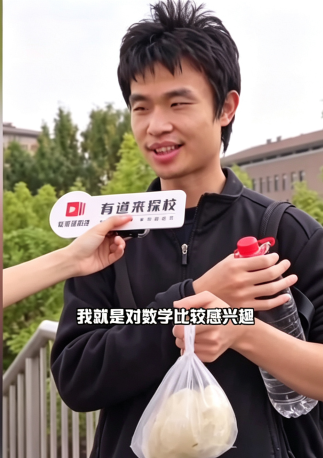 人们把矿泉水瓶和馒头放在一起,再添上凌乱的头发、不善言辞和两枚国际奥数满分金牌,一个“北大扫地僧”就制作完成了。数学能力很难拍下来,所谓生活上的笨拙却十分上镜。于是,每一处不修边幅,都成了天赋的收据;每一个被解释为不谙世事的细节,都像数学水平的旁证。一个人越不会生活,似乎越有可能理解宇宙。这背后大概还有一套朴素的天赋守恒定律。

七 | 一个人在数学上得到得太多,命运就该从别处扣掉一点。

八 | 最好不懂穿衣,不善交际,也不知道钱有什么用。否则老天爷未免偏心得过于明显。你可以在数学上胜过我,但最好在生活上输给我。双方各赢一局,世界重新显得公平。所以,韦东奕后来承担了一份本人未必知情的兼职:负责活得像韦东奕。这里说的不是现实中的韦东奕,而是网民共同创作的那一个。他住在北大某个想象中的藏经阁里,靠馒头和白水维持生命,只对偏微分方程有欲望。现实中的韦东奕只需要活一辈子,这个“韦东奕”却在短视频里活了几亿遍。时间一久,赝品反而要求正版接受鉴定。8月18日晚,经北大确认的韦东奕B站账号更新了一条视频,题目叫《一道有趣的题》。视频里没有韦东奕的脸,也没有他的声音,只有一道关于九个长方形的数学题,以及解答过程。
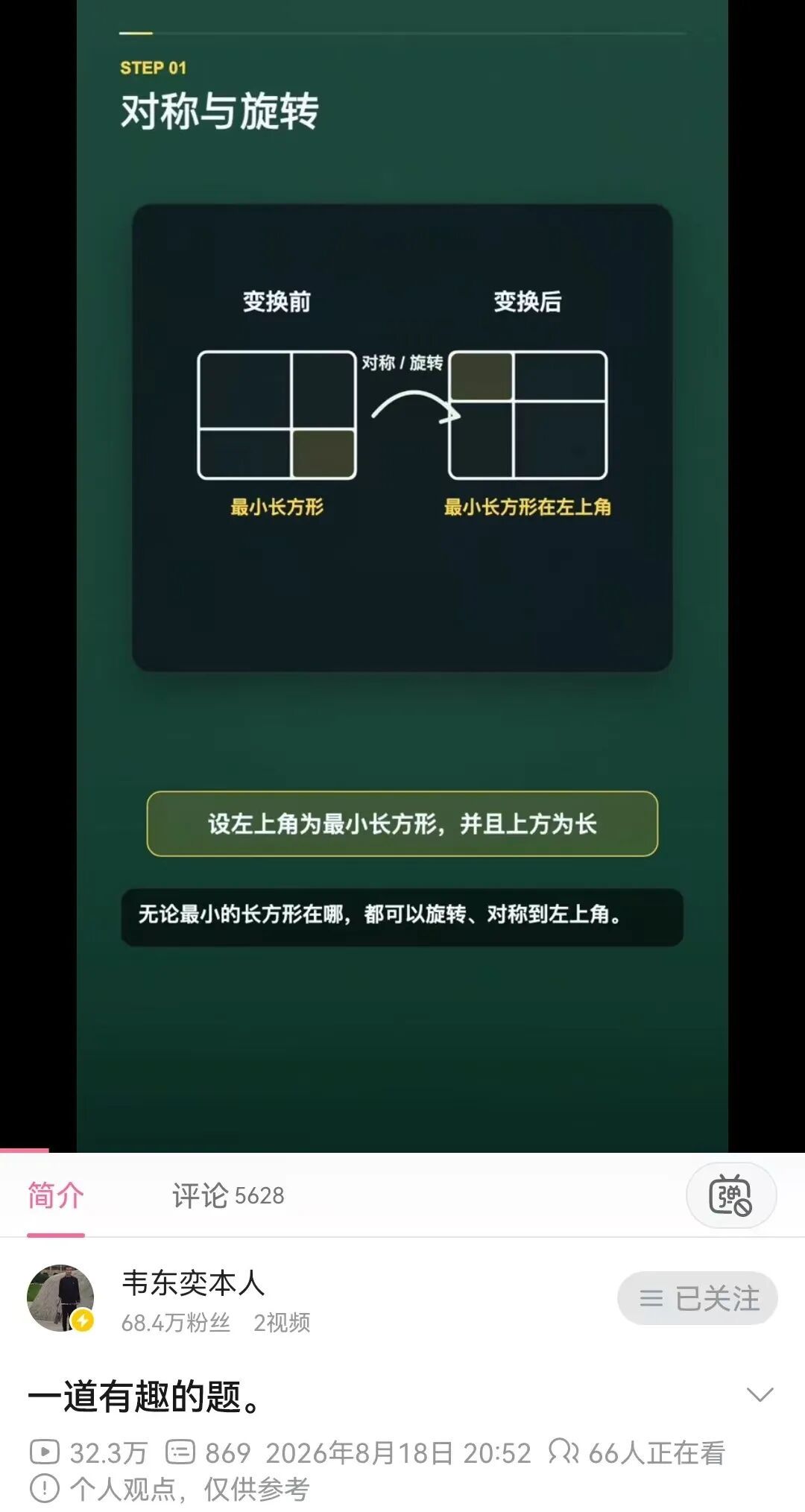 几天后,人们发现账号橱窗里多了两本由韦东奕主编、龙门书局出版的练习册:《小学数学解题能力训练》卖39.8元,《初中数学解题能力训练》卖49.8元。严格说来,这甚至不像通常意义上的带货。没有直播,没有口播,没有“家人们”,也没有把原价九十九块九砍到三十九块八。

九 | 只有一道题,和两个安静躺在橱窗里的价格。数学教师主编数学练习册,原本和牙医出售牙线差不多,并不值得召开一次精神生活研讨会。但当事人一旦从韦东奕变成“韦神”,价签就有了冒犯性。一个扫地僧可以破解难题,却不该知道39.8元是什么意思。

十 | 于是,一个庄严的问题出现了:韦东奕是不是也要商业化了?有人替他辩护,说知识理应获得回报,数学家也有改善生活的权利。这些话当然都对,只是未免把问题想得太认真。它们等于默认,网民确实有权审核一个数学家该不该卖书,只是这次应当予以批准。

十一 | 真正的问题是,这道题为什么需要审批。没有证据表明,韦东奕把上架练习册当成一场对公众人设的反抗。

十二 | 说他反抗网民,仍然把网民摆得太高,仿佛他做每件事,都得先研究舆情,再决定赞成还是反对。

十三 | 无论背后的具体分工和主观动机如何,客观上发生的事情都简单得多:数学家照常生活,网民的想象自己撞到了墙上。一个人不需要对一份自己从未签字的传记发表反对声明。

十四 | 真正的自由也未必是推倒别人塑造的自己,而是根本不拿那个自己当生活的参照物。今年的菲尔兹奖,也给民间的数学家生活管理办法添了些麻烦。王虹领奖时穿了一身被时尚媒体辨认为Alexander McQueen的黑色西装,项链和戒指也被辨认为卡地亚。她喜欢建筑和绘画,读书时选过建筑课,还去建筑师事务所实习了一个月。同一天获奖的邓煜,家里的客厅却近乎空荡,没有沙发和电视;他不开车,喜欢围棋、漫画、李商隐,也写旧体诗。别人问他会不会考虑收入和生活条件,他回答,当然会,只不过收入不是优先事项。两个人的生活几乎没有统一格式,却领到了同一种奖牌。看来国际数学联盟只审查数学,没有审查衣柜、客厅和消费观。这项严重的制度漏洞,最后只好由网民自发补上。王虹的名牌不能证明数学家应该精致,邓煜的空客厅也不能证明数学家应当简朴。他们只证明了一个本来不需要证明的事实:数学家是一种职业,不是一个角色。所谓率性,也不是每个人都要活得热闹、漂亮或者与众不同。率性的最低标准,不过是不把旁观者当作自己的编剧。可人们很喜欢编剧这份工作。

十五 | 男人应该怎样,女人应该怎样,老板应该怎样,知识分子应该怎样,三十岁、四十岁又应该怎样。一个活人有无数种可能,角色却只需要几件道具。

十六 | 理解一个人需要耐心,想象一个人只需要矿泉水和馒头。更麻烦的是,我们不但热衷替别人写剧本,有时也会主动出演。企业家被称为工作狂,就不便公开度假;一个学者因为朴素受到赞美,后来买件贵衣服,仿佛都辜负了人民。互联网天天劝人“做自己”,实际喜欢的是一个人永远做昨天的自己。

十七 | 第一次被拍下来的样子,渐渐成了他的证件照;任何变化,都可能叫作塌房。这大概是两种相连的低智商生活:一种是按照自己的想象安排别人,另一种是按照别人的想象安排自己。前一种可笑,后一种多少有点可悲。但也不必因此把网民写成一群坏人。大家只是害怕复杂。一个人如果既聪明又会生活,既淡泊又懂砍价,今天吃馒头,明天也可能去一家好餐厅,他就很难被一句话说完。而一句话说不完的人,会给这个世界带来轻微的不安。于是大家互相归类,互相规定,又互相服从,仿佛人生是一座没有物业的社区,只好每个业主都出来管一点闲事。替别人设计生活的人,转过身,也在按照另一些人的设计生活。没有谁真正站在荒谬之外。我现在的桌子仍然经常很乱。不过那通常是因为懒,或者稿子催得太急,不再是为了证明自己像个记者。这个区别很小,但总算那张桌子重新归我了。网民当然也可以继续保留那个只喝白水、只吃馒头、从不知道商品价格的数学家。这个人非常纯粹,非常听话,唯一的问题是并不存在。现实中的韦东奕主编了两本练习册,一本39.8元,一本49.8元。想象中的“韦东奕”大概永远比他更像数学家,就像我那张乱糟糟的桌子曾经比我更像记者。

十八 |
Current article:http://835s.foujiongwenruapoumeizhan.buzz/d2z7q/20260826/3072427.html
Published on:12:58:49


